
H2 BLASTER

Restores the engine’s optimal performances

Test the efficiency of TEXA's tools.
Request a demo in your workshop.

All TEXA’s certified quality for a reliable and safe solution

H2 BLASTER is the innovative solution that introduces the advantages of an advanced technology and the reliability of the TEXA certified industrial production (IATF 16949, ISO 9001, ISO/IEC27001, TISAX e VDA 6.3.), completely “Made in Italy” on modern assembly lines, in the industry of endothermic engine
decarbonisation devices.

Over time the fuel used to power vehicles, either petrol, diesel, LPG or methane, generates carbon residues that deposit on essential components, such as the pistons, valves, injectors, particulate filter, catalysts and inevitably leads to a progressive deterioration of engine efficiency.

This translates into lower performance, high consumptions, more pollution and extra costs due to unexpected repairs.

The solution is H2 BLASTER, the new tool developed by TEXA that, using the combined power of hydrogen and oxygen, cleans the parts involved in the internal combustion process completely and restores the engine’s optimal performance, at the same reducing consumptions and harmful emissions.

What are the benefits obtained after
a treatment with H2 BLASTER

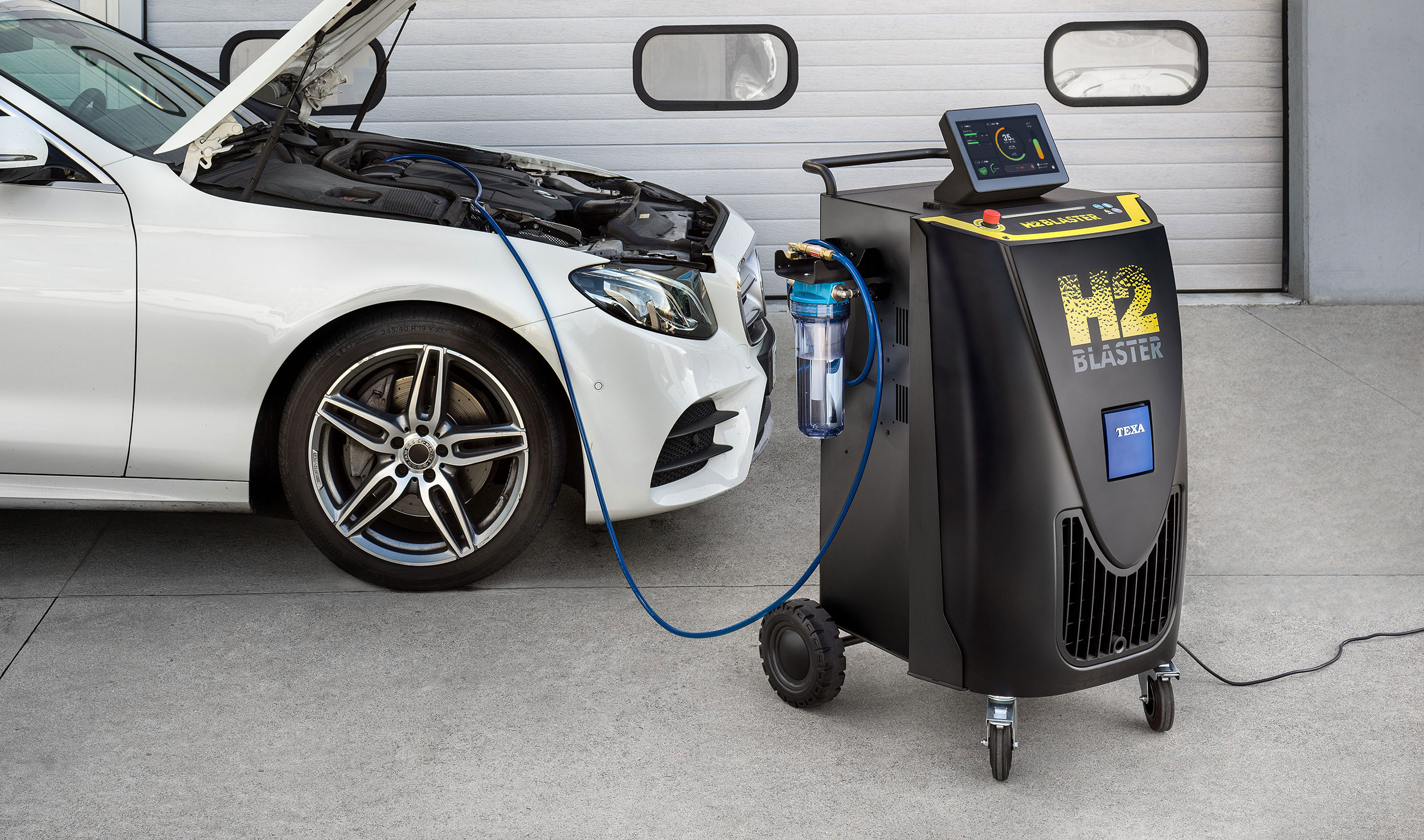
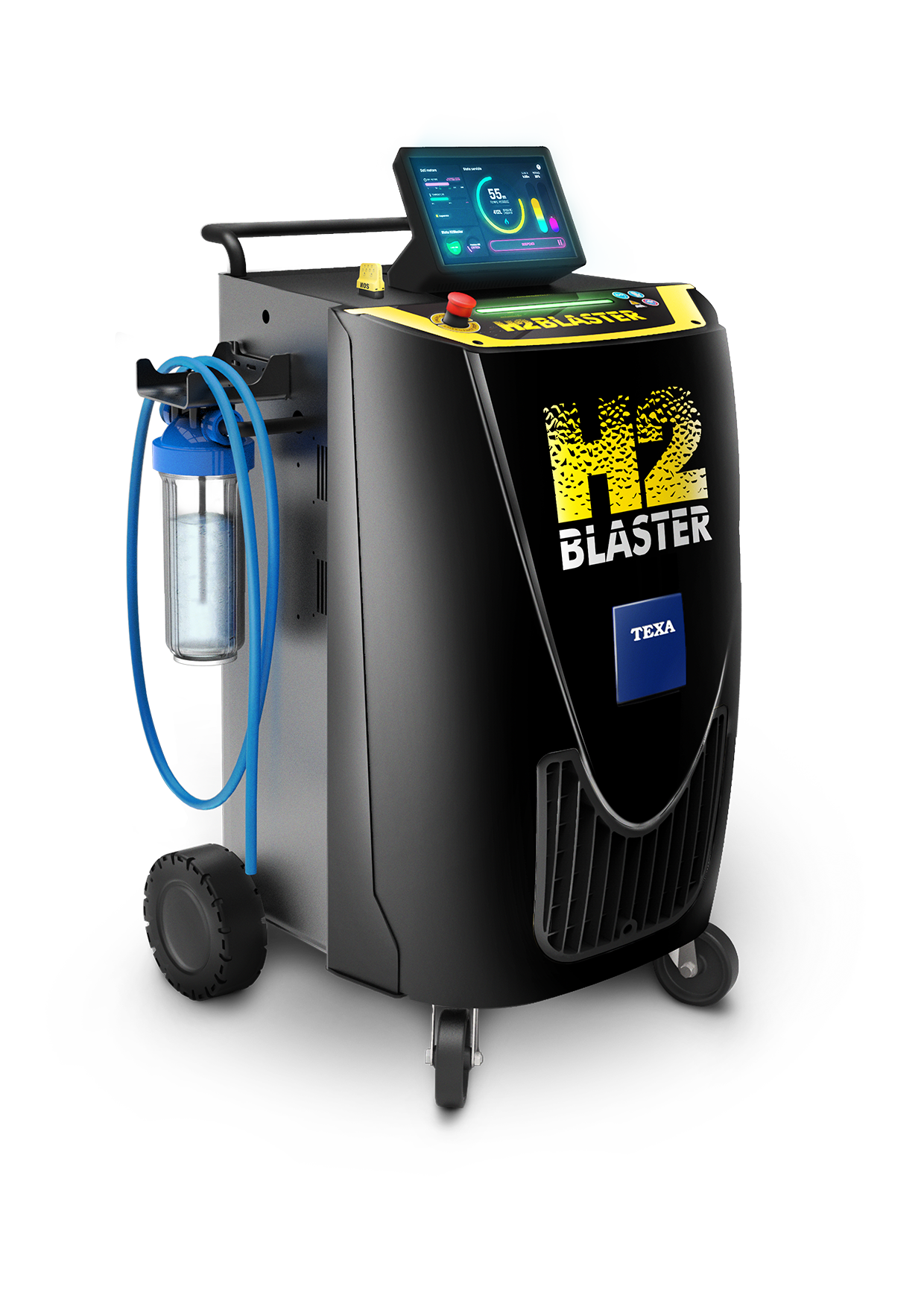
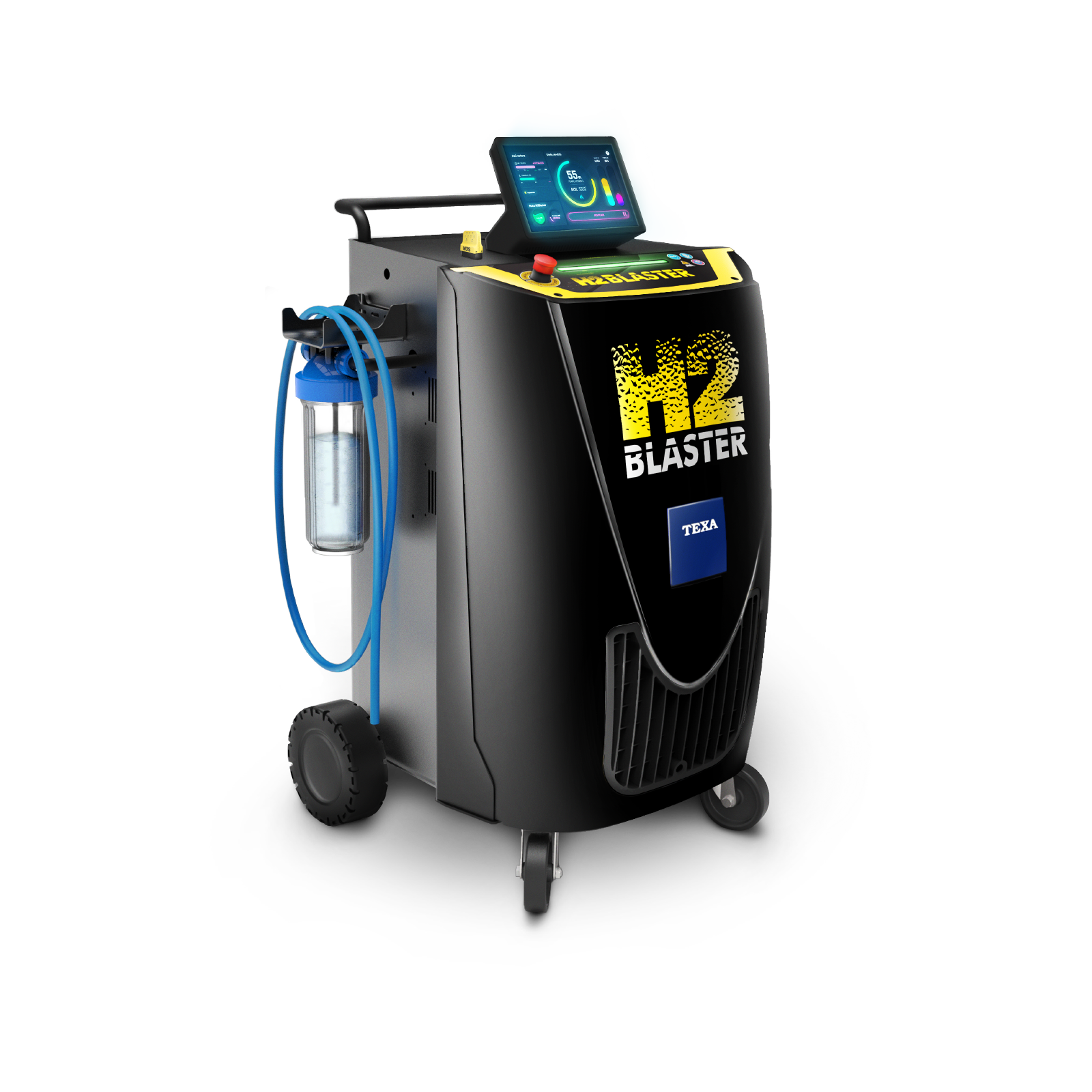
Steel body
120x73x70 cm - 80kg

Certified flame arrestor
safety valve

Bubbler
for visual operation
test and further
safety level

Off-road rear wheels
and front soft wheels

316L stainless steel
electrolytic cell

Sensor and cell temperature

Hydrogen leak sensor

Pressure relief valve

High-visibility multifunction LED
with audible warning

Emergency stop button

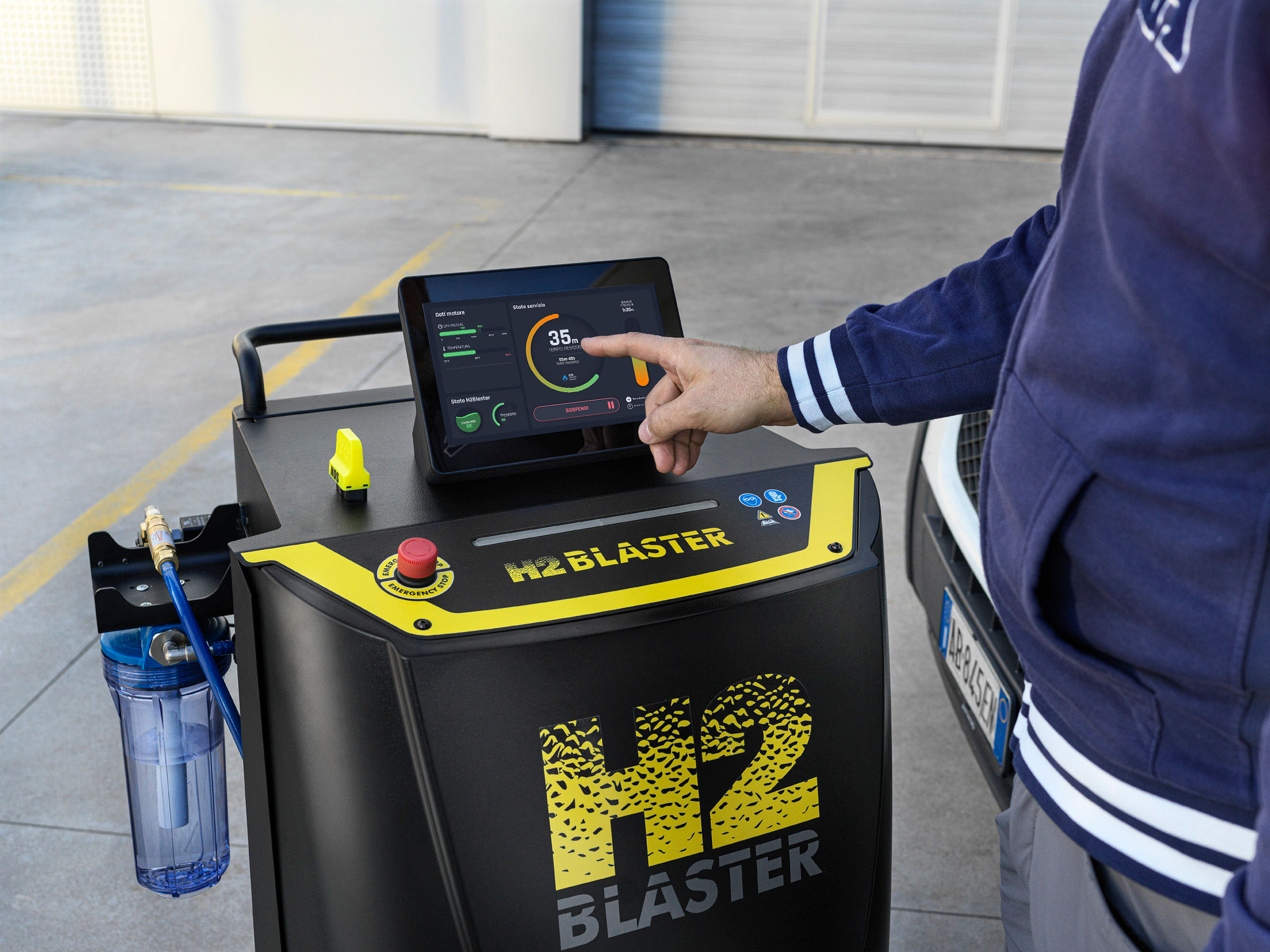
Display 10’’ Touch screen
industrial Android

VCI NOS included
for vehicle engine check
restored initial power and better acceleration performances

more stable idle and reduced noisiness

fuel economy

reduction of harmful emissions

DPF, EGR and Turbo cleaning

cleaning of the internal engine parts without disassembling them

Test the efficiency of TEXA's tools.
Request a demo in your workshop.

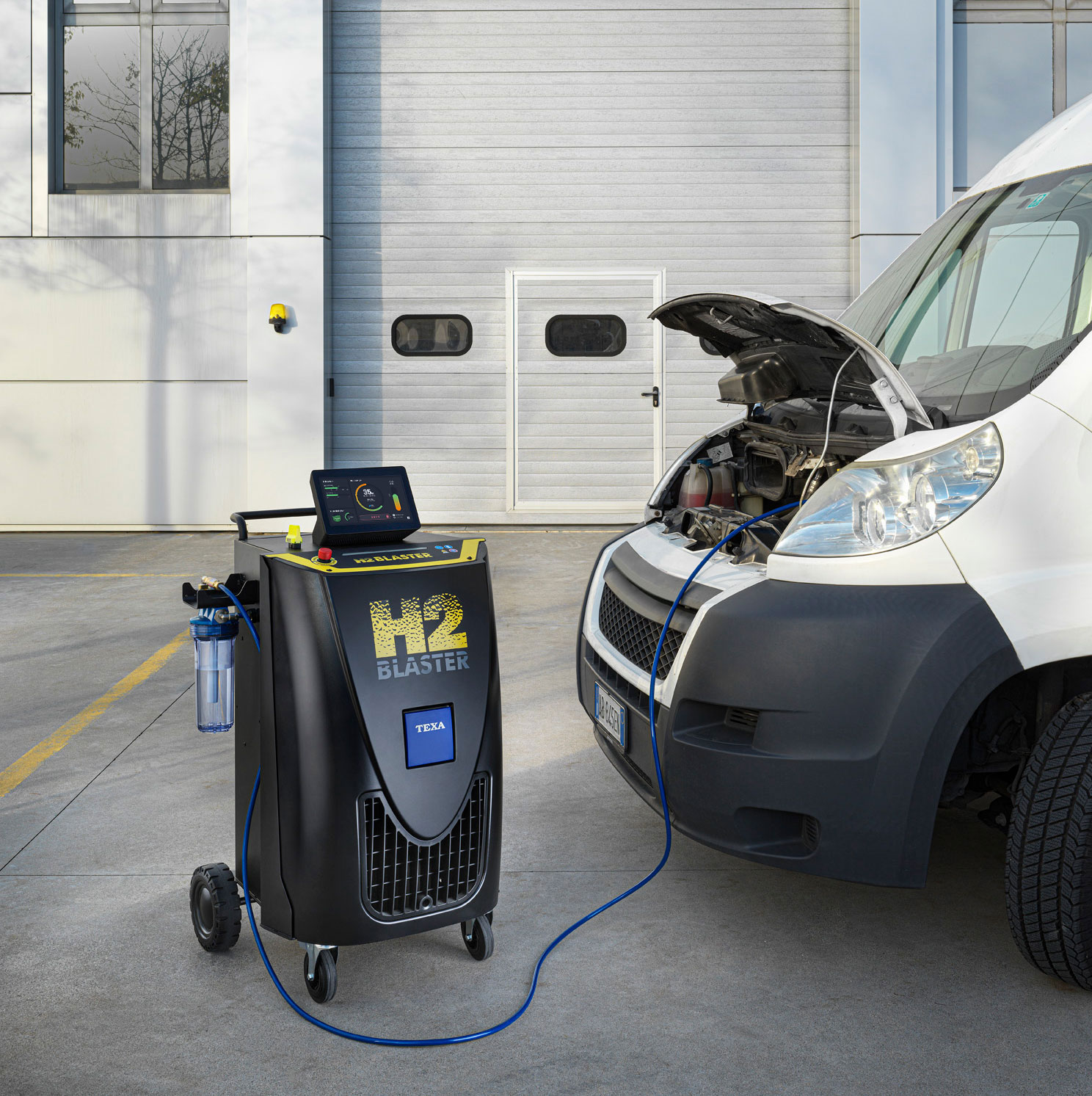
H2 BLASTER in action
efficient, powerful, highly performing

H2 BLASTER uses the water electrolysis process to generate oxyhydrogen, a mixture of hydrogen and oxygen that, with the
engine cold and warm, is injected into the intake manifold through the practical service pipe and reaches the combustion
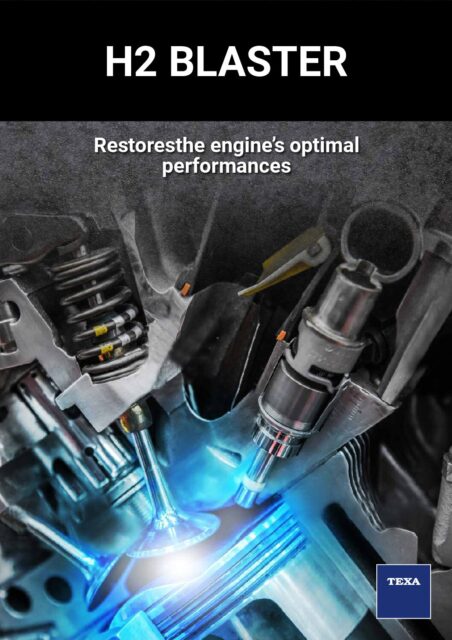
chamber. Here the gas is triggered by the high temperature and
reacts transforming into water vapour and high pressure.

This way the decarbonisation process starts: the water vapour
penetrates the deposits and melts the carbon deposited on the
pistons, valves and injector tips and in general on the components that are between the chamber and the exhaust duct.

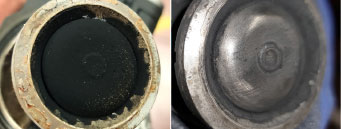
Before and after a treatment with H2 BLASTER

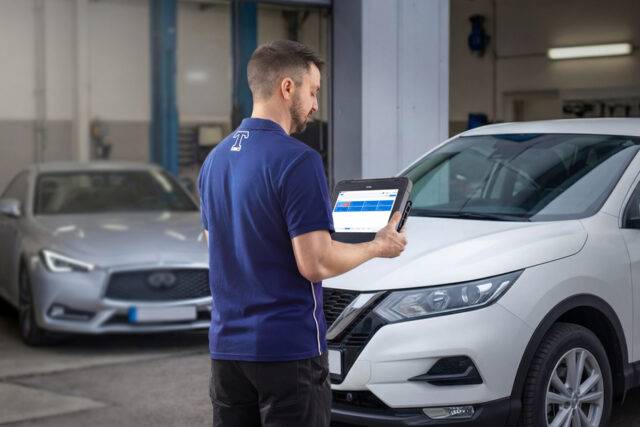
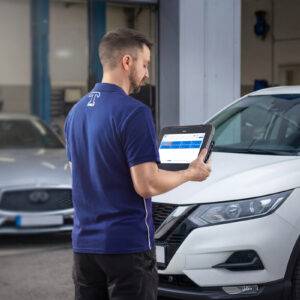
All the treatment phases are monitored by NOS (NAVIGATOR OBD Service) that,
connected to the diagnostic socket, verifies that the procedure is carries out safely.

NO CHEMICAL ADDITIVE,
ONLY HIGH-PRESSURE
100% NATURAL VAPOUR

Where does H2 BLASTER act?
• combustion chamber (piston crown, valve heads, injector tips)
• EGR valve
• variable geometry turbine
• particulate filter
• oxygen sensor
• catalyst
• all the exhaust manifold components

Safety first
thanks to exclusive technical solutions

Hydrogen is a flammable and explosive gas.

H2 BLASTER, on the contrary, is equipped with a series of operator safety control devices that, other than
managing efficiently any possible failure, guarantee a highly performing treatment:

Using the NOS
all the phases
are monitored continuously

To manage all the operating phases efficiently, TEXA also developed NOS, NAVIGATOR OBD Service, a diagnostic device able to communicate with the various electronic control units in the vehicle and to read the parameters required so that the decarbonisation is performed in safe way.

PHASE 1

Engine rev and
temperature check

NOS constantly checks the engine’s rpm and temperature on order to prevent the H2 BLASTER from continuing to produce gas if the engine shuts down or overheats

PHASE 2

Test drive,
with a dedicated APP

After the decarbonisation, the softened and detached particulate residues must be expelled to avoid them from accumulating in the particulate filter, in the catalyst or in the exhaust pipe: for this reason, it is important to carry out a test drive.

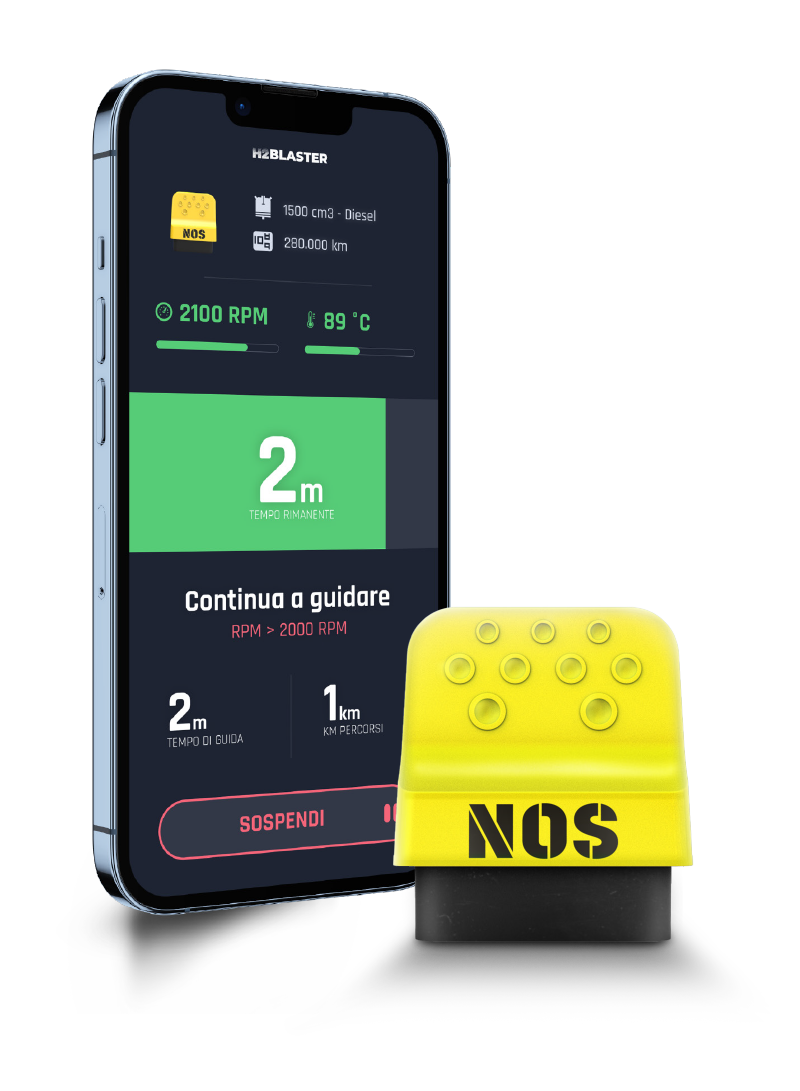
NAVIGATOR OBD Service is essential during this phase because when the vehicle is moving it continues to read the engine revs and the temperature values that it sends in real time to the H2 BLASTER app* that can be downloaded on an iOS or Android smartphone.

During the test drive the app requests the operator to drive 5/6 kilometres at high engine speed, so to favour the discharge of the unburnt residues. Through an audible notification the app warns when it is possible to end the test drive.

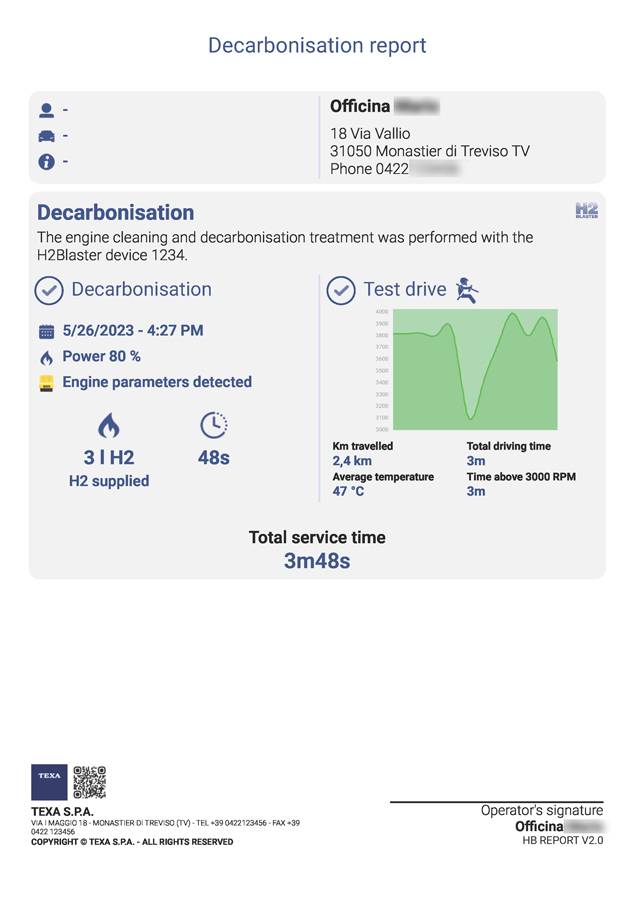
Once the decarbonisation process is complete, H2 BLASTER generates a detailed report to give the customer to confirm that the service was carried out. All the generated reports are filed in the myTEXA portal.

* to connect a smartphone to NOS and un the TEXA H2 BLASTER app, simply scan with the camera the QR code on the tool’s display.

On-line technical assistance

A specialised operator always available

H2 BLASTER, connected to the Internet through the Wi-Fi network, also allows using a very useful after-sales technical assistance service.
To use it, simply access the software interface’s Applications page and select the Remote Assistance item.
From here you can request the help of a specialised technician that remotely will take control of the H2 BLASTER to carry out maintenance activities to support the operator in the workshop.
For example, the technician can proceed with the station’s activation, check its operating status, any possible error that it may have generated and much more.

Functions

Scheduled service

The interconnection between myTEXA and H2 BLASTER allows programming, directly from the portal, a service with the data received by the customer upon check-in and transferred to H2 BLASTER.
At this point the operator must simply launch the service from the display and complete the operation professionally.

H2 BLASTER performs the treatment and at the end generates a report that is sent to the myTEXA portal to be filed.
The report, that contains the result of the service, the information on the times, the process parameters and any
possible failure notification, can be viewed, printed and sent to the customer, even some other time.

In the myTEXA portal the machine status, component wear, scheduled maintenances and all the performance tests are always available in order to monitor the deterioration of the electrolytic cell and replace it if needed.

Routine service

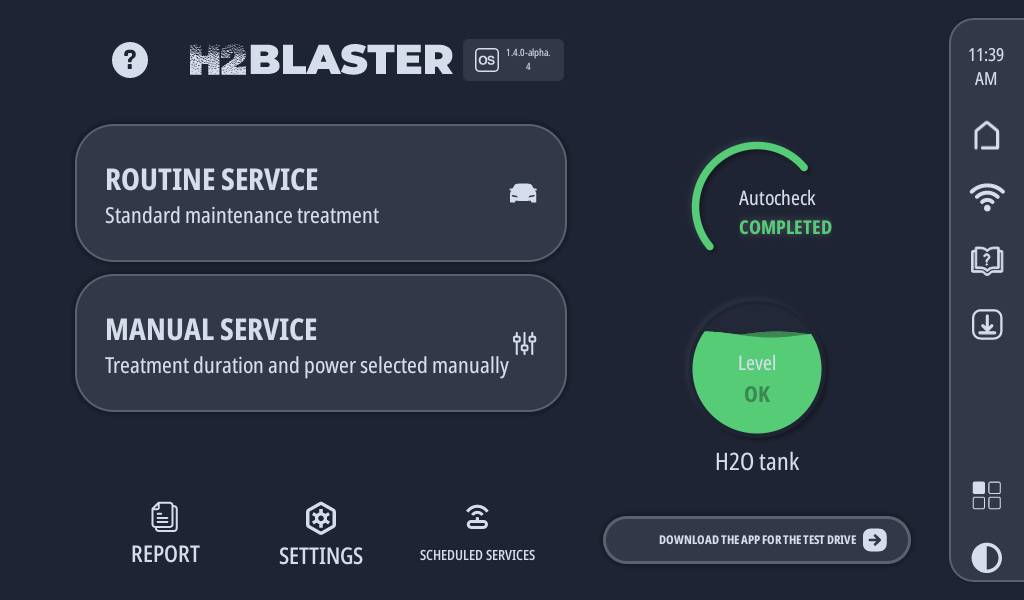
The «Routine service» option has also been developed, it consists on a pre-configured decarbonisation treatment based on the following parameters:

· Duration 45 minutes
· 100% power
· Possibility to run the treatment at idle, thereby ensuring greater intake and a longer retention of hydrogen within the engine.

Thanks to this new function, DPF clogging issues are prevented and the workshop has greater opportunities to build customer loyalty.

Main features and procedures for using H2 BLASTER

Technical Specifications

Every TEXA product is supported by comprehensive and constantly updated technical documentation.

Gallery

Depliant

Video

The NOS tool for H2 BLASTER
Filling the tank of H2 BLASTER
The initial setup of H2 BLASTER
H2 BLASTER functioning